
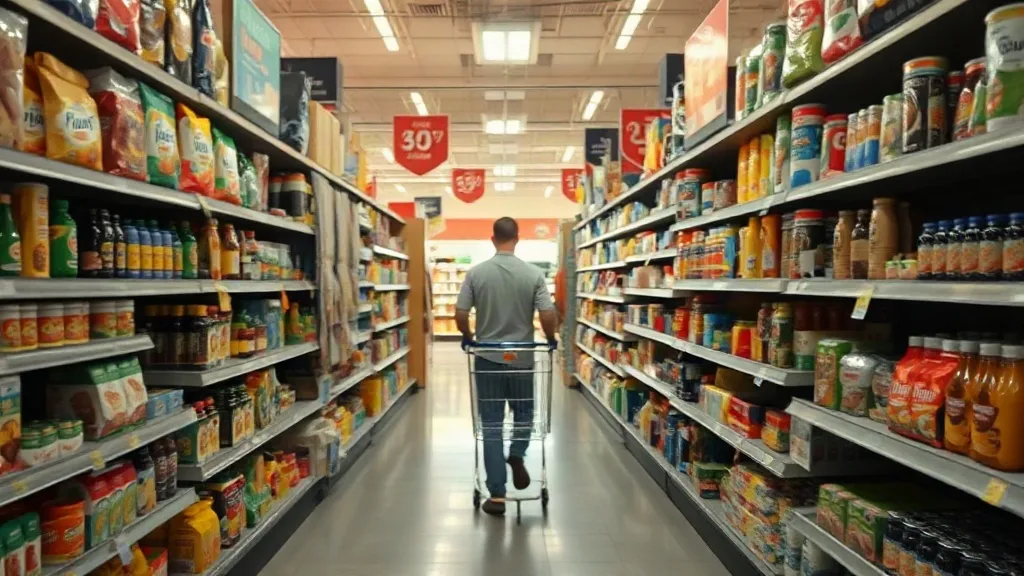
Discount grocers tend to get more interesting when the economy gets less comfortable, and Grocery Outlet's third-quarter 2026 earnings call landed right in that sweet spot. The extreme-value chain, which built its business on opportunistic buys and a treasure-hunt shopping experience, used its quarterly sit-down with analysts to walk through how it is holding its position while shoppers remain selective and costs keep shifting underneath everyone in food retail.
Earnings call transcripts are rarely page-turners, but they are where the real story hides. Prepared remarks tell you what a company wants you to hear; the question-and-answer session tells you what analysts are worried about. Reading the Grocery Outlet Q3 2026 transcript with both ears open gives a clearer picture of a business that is growing but doing so carefully, and of a management team that knows its model only works if the deals keep flowing.
The Bargain Model Under a Microscope
Grocery Outlet does not run like a conventional supermarket. It buys surplus and closeout inventory from brand manufacturers, which means its assortment changes constantly and its cost of goods depends heavily on how much unsold product is sloshing around the supply chain. When other retailers over-order or a launch flops, Grocery Outlet benefits. When supply chains tighten and manufacturers get disciplined about inventory, the pipeline of bargains narrows.
That dynamic sits at the heart of the Q3 2026 discussion. Management's commentary on opportunistic buying matters more than almost any other line item, because it determines both what customers find on shelves and how much margin the company can squeeze out of each transaction. A well-stocked pipeline of closeouts gives the chain pricing power and product excitement. A thin one forces it to lean on everyday items that carry less differentiation.
The transcript suggests leadership is treating supply availability as a moving target rather than a fixed condition. That is the honest way to frame it. Anyone who has followed this company knows the deal flow is cyclical, and the call reflected a team managing that cycle rather than pretending it away.
Same-Store Sales and the Shopper Who Keeps Trading Down
Comparable store sales are the number every analyst circles first, and for good reason. They strip out the noise of new openings and show whether existing stores are actually pulling in more business. On the Q3 2026 call, the conversation around same-store sales carried an implicit question: is the trade-down shopper sticking around, or drifting back to traditional grocers as inflation cools?
The answer, based on management's framing, is nuanced. Value-seeking behavior does not evaporate the moment prices stabilize. Households that discovered a discount grocer during a squeeze often keep it in rotation even after their budget loosens, especially if the experience feels like a hunt rather than a chore. Grocery Outlet has leaned into that psychology for years, and the transcript shows the company still views customer acquisition as a durable gain rather than a temporary spike.
What deserves scrutiny is retention. Winning a shopper is one thing; keeping them when a mainstream grocer down the street launches its own aggressive promotions is another. Management's remarks on basket size and trip frequency are worth reading closely, since those metrics reveal whether new customers are becoming regulars or just occasional browsers.
Margins, Mix and the Cost of Being Cheap
Extreme value does not mean low costs. Grocery Outlet still pays for labor, freight, rent and technology like every other retailer, and its margin structure is thinner than most. The Q3 2026 call touched on gross margin, and the subtext is familiar to anyone who tracks the sector: the balance between passing savings to shoppers and protecting the bottom line is a constant negotiation.
Shrink, freight and wage pressure are recurring themes across grocery earnings this cycle, and there is no reason to believe Grocery Outlet is immune. What is notable is how the company frames its response. Rather than chasing margin through price increases, the model rewards discipline in purchasing and store-level execution. When you buy opportunistically, your margin is largely decided at the moment of acquisition, not at the shelf.
That makes the buying team arguably the most important group in the company. A sharp purchasing organization finds closeouts at the right price and in the right categories; a weak one fills shelves with items that do not move. The transcript's emphasis on sourcing and category management reflects that reality.
Store Growth: The Long Runway Argument
One of the more durable parts of the Grocery Outlet story is expansion. The chain has repeatedly described a long runway of potential locations, and the Q3 2026 call kept that narrative alive. New stores matter for a simple reason: the format has proven it can work in markets that already have plenty of grocery competition, because it competes on a different axis.
- New markets add customers who have never encountered the treasure-hunt format before.
- Density in existing regions improves distribution efficiency and brand recognition.
- Independent operators, who run stores under the company's model, carry local knowledge that a centralized chain often lacks.
The operator-led structure is a genuine differentiator, and it cuts both ways. It keeps store-level costs flexible and entrepreneurial, but it also means the company depends on recruiting and supporting capable operators. Management's comments on the pipeline of new operators are therefore just as important as the store count itself.
Why the Franchise-Like Structure Matters
Because each store is run by an independent operator, Grocery Outlet carries less direct labor risk than a fully corporate chain. That advantage becomes more visible when wages rise. The tradeoff is complexity: supporting hundreds of small operators requires systems, training and oversight that a conventional chain does not need in the same way. Investors should watch whether that support infrastructure scales as fast as the store base.
What the Q&A Session Revealed
The question-and-answer portion of any earnings call is where prepared optimism meets analyst skepticism. On this call, the recurring themes were predictable but telling: supply availability, promotional intensity from larger competitors, and the sustainability of recent traffic gains.
None of those questions have easy answers, and management did not pretend otherwise. The tone was measured rather than triumphant, which is appropriate for a company whose fortunes are tied to forces partly outside its control. When an analyst presses on whether bargain supply will tighten, the honest response is that it fluctuates, and the company plans for both scenarios.
That kind of candor is worth noting. Calls where every question gets a sunny answer tend to age poorly. Calls where management acknowledges uncertainty and explains its contingencies tend to hold up better against the next quarter's reality.
Reading Between the Lines
For investors and industry observers, the Grocery Outlet Q3 2026 transcript is less a scorecard than a map of the company's dependencies. Its growth depends on store openings, its traffic depends on deal flow, and its margins depend on buying discipline. All three are interconnected, and none is fully controllable.
What the call makes clear is that the company is not trying to be everything to everyone. It is not chasing premium shoppers or building out elaborate e-commerce. It is doubling down on the thing that made it distinctive: unpredictable assortment at prices that make people stop and look. In a grocery landscape crowded with lookalike chains, that focus is an asset, provided the bargains keep coming.
Frequently Asked Questions
What does the Grocery Outlet Q3 2026 earnings call transcript cover?
It covers the company's third-quarter results and outlook, including same-store sales, gross margin trends, store growth plans and management's commentary on supply availability and competitive pressure. The Q&A portion adds analyst concerns about traffic sustainability and promotional intensity.
Why is opportunistic buying so important to Grocery Outlet?
Because the company's entire value proposition rests on finding closeout and surplus inventory at attractive prices. The availability and quality of those deals directly determine both the products customers see and the margins the company earns.
Is Grocery Outlet benefiting from shoppers trading down?
Management's commentary suggests value-seeking behavior has brought new customers in and that many are staying in rotation. The open question is retention once mainstream grocers ramp up their own promotions.
How does the operator-led store model affect the business?
Independent operators give the chain local flexibility and reduce direct labor exposure, but the model requires robust training and support systems. Scaling that infrastructure alongside store growth is a key execution risk to watch.