
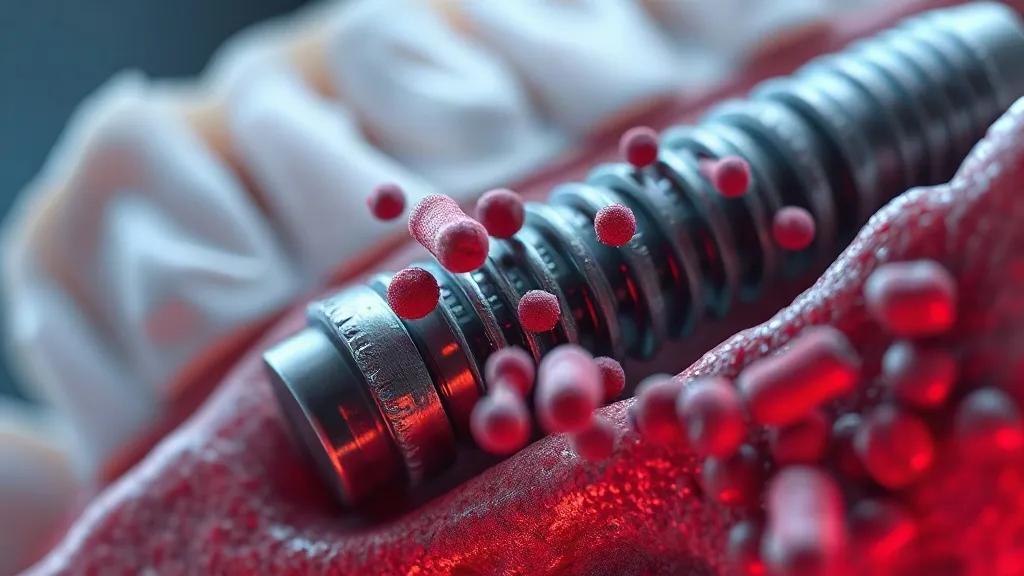
For millions of people with missing teeth, dental implants are a modern miracle: a titanium screw fused to the jawbone, topped with a lifelike crown, restoring both function and confidence. But for a small yet significant minority, implants become a source of chronic infection, pain, and even bone loss. Now, scientists have uncovered a startling mechanism behind these failures: the implants themselves may be hijacking the immune system, turning it against the very bone that holds them in place.
The Hidden Battlefield: How Implants Interact with Bacteria
Dental implants are not immune to the oral microbiome. Within minutes of placement, a film of proteins and bacteria coats the titanium surface. In most cases, regular oral hygiene keeps this biofilm in check. But when harmful bacteria like Porphyromonas gingivalis and Aggregatibacter actinomycetemcomitans take up residence, they can trigger a condition known as peri-implantitis, an inflammatory disease that destroys the soft tissue and bone surrounding the implant.
What makes peri-implantitis so stubborn? For years, researchers blamed the bacteria themselves and the difficulty of cleaning the intricate threads of an implant. But a new study suggests a more insidious culprit: the metal itself.
The Titanium Trap: Corrosion and Immune Hijack
In a series of laboratory experiments, researchers observed that certain oral bacteria can corrode titanium, the metal used in most dental implants. This corrosion releases microscopic titanium particles into the surrounding tissue. These particles are not inert; they act as irritants, provoking an immune response. But here is the twist: instead of destroying the bacteria, the immune cells seem to be reprogrammed by the titanium particles to produce a flood of inflammatory molecules.
Specifically, the particles appear to activate a group of immune cells called macrophages, which normally engulf and digest pathogens. When exposed to titanium particles, these macrophages shift into overdrive, secreting cytokines such as interleukin-1β and tumor necrosis factor-alpha. These are the same molecules implicated in autoimmune diseases and chronic inflammatory conditions. The result is a self-perpetuating cycle of inflammation that damages the jawbone and creates an environment where bacteria thrive.
“The implant is not just a passive surface,” explains one of the study’s authors. “It actively participates in the disease process by releasing particles that confuse the immune system.” This immune hijacking helps explain why peri-implantitis often fails to respond to antibiotics: the bacteria may be secondary to the metal-induced inflammation.
Why This Matters for Patients and Dentists
Peri-implantitis affects an estimated 10 to 20 percent of implant patients, and with millions of implants placed worldwide each year, even a small percentage translates to hundreds of thousands of people. The condition can lead to implant loss, bone grafts, and costly revisions. Understanding the role of titanium particles could lead to new preventive strategies and treatments.
For instance, implant surfaces could be engineered to resist bacterial corrosion, or coated with materials that do not provoke an immune response. Already, some manufacturers offer ceramic or zirconia implants, which may avoid metal particle release, though long-term data are still limited. On the diagnostic side, dentists might one day test for titanium particles in the gum tissue to catch peri-implantitis early, before bone loss becomes irreversible.
“This research opens a new avenue for treating implant infections,” says Dr. Elena Rodriguez, a periodontist not involved in the study. “Instead of just targeting bacteria with antibiotics, we might need to modulate the immune response or remove the source of irritation.”
What This Means for You: Practical Takeaways
If you have dental implants, there is no need to panic. Most implants last decades without issue. However, the findings underscore the importance of regular dental check-ups and meticulous oral hygiene. Peri-implantitis often starts silently, with bleeding gums or slight swelling that patients may overlook. Early detection is key: once bone loss begins, it is difficult to reverse.
Here are a few steps to protect your implants:
- Brush and floss diligently. Use a soft-bristled brush and interdental brushes or water flossers to clean around the implant crown.
- Attend professional cleanings. Your dentist or hygienist can detect early signs of inflammation and remove bacterial deposits.
- Watch for warning signs. Report any bleeding, tenderness, or mobility of the implant to your dentist promptly.
- Consider your risk factors. Smoking, diabetes, and a history of periodontal disease increase the risk of peri-implantitis.
While the study does not suggest that implants are dangerous for the average patient, it does highlight the need for vigilance and further research. The next step is to translate these laboratory findings into clinical practice, perhaps with new implant materials or immune-targeted therapies.
The Bigger Picture: A Lesson in Immune Complexity
The discovery also serves as a reminder of how intimately our immune system interacts with the built environment inside our bodies. From joint replacements to pacemakers, implanted devices are increasingly common, and each has the potential to provoke an immune reaction. The new findings on dental implants may have implications for orthopedics and cardiology, where metal implants can also release particles and cause inflammation.
“We tend to think of implants as inert,” says the study author. “But the body sees them as foreign, and the immune system does not always distinguish between a pathogen and a particle of metal.” This blurring of lines can lead to chronic inflammation, a factor in many age-related diseases.
As research continues, patients and clinicians alike should stay informed. The good news is that dental implants remain a highly successful treatment for most people. The bad news is that we are only beginning to understand the subtle ways they can go wrong. By shedding light on the titanium-induced immune response, scientists are paving the way for smarter implant designs and more effective treatments for peri-implantitis.
Frequently Asked Questions
Can dental implants really affect my immune system?
In some cases, yes. Bacteria can corrode titanium implants, releasing particles that trigger an inflammatory immune response. This does not mean implants are unsafe for everyone, but it can contribute to peri-implantitis and bone loss in susceptible individuals.
What are the early signs of peri-implantitis?
Early signs include redness, swelling, bleeding when brushing, and tenderness around the implant. As the condition progresses, the implant may become loose. Regular dental check-ups can help catch it early.
Are zirconia implants a safer alternative?
Zirconia (ceramic) implants do not release metal particles, so they may reduce the risk of titanium-induced inflammation. However, long-term studies are still ongoing, and zirconia implants may not be suitable for all cases.
How can I prevent implant problems?
Maintain excellent oral hygiene, attend regular professional cleanings, and avoid smoking. If you have diabetes or a history of gum disease, work closely with your dentist to manage your risk.
Should I remove my implant if I have peri-implantitis?
Not necessarily. Many cases can be managed with nonsurgical treatments like antibiotics and deep cleaning, or surgical interventions such as flap surgery or bone grafting. Removal is a last resort.