
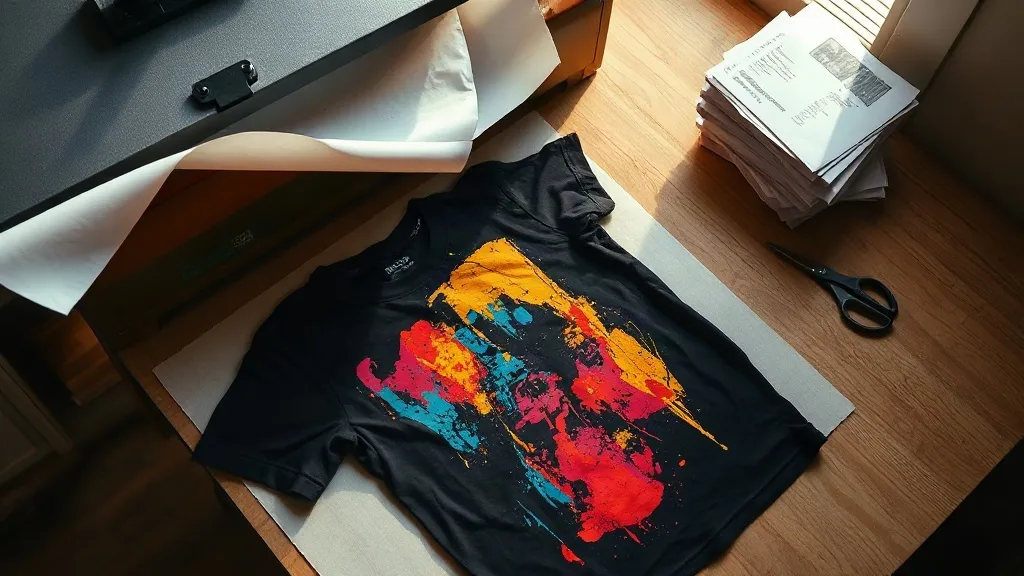
Most people meet dtf transfers by accident. You order a custom shirt, the print feels oddly soft, and someone tells you it is not screen print or vinyl at all. That moment is usually where the curiosity starts, because a good DTF print behaves nothing like the stiff, plastic-feeling transfers many of us grew up with. It stretches with the fabric, holds fine detail, and works on cotton, polyester, and blends without the usual compromises.
This guide is for the person who wants to actually use the process, not just read a brochure. Maybe you run a small apparel side business out of a spare room. Maybe you print team jerseys for a local club. Or maybe you are simply tired of paying shop prices for one-off designs. Below you will find how the method works, how to judge quality before you buy, and the pressing habits that separate a print that lasts from one that cracks in a month.
What a DTF transfer actually is
DTF stands for direct to film. A printer lays water-based pigment ink onto a special PET film, then a powdered hot-melt adhesive is applied over the wet ink and cured. What you end up with is a thin, flexible sheet of printed adhesive-backed artwork. When you press it onto a garment with heat, the adhesive melts into the fibers and the film peels away clean. The ink stays behind, bonded to the fabric.
That powder step is the part people underestimate. It is what allows dtf prints to grip cotton as firmly as polyester, which is why the method spread so quickly through small print shops. Traditional transfer papers often needed a specific fabric blend or a pretreatment spray. DTF mostly sidesteps that, and it handles full-color gradients and tiny lettering without the setup cost of screen printing.
Why the film-and-powder approach matters
Because the adhesive sits between the ink and the fabric rather than being mixed into the ink, the color layer stays intact. You get saturated color on dark shirts without a white underbase printed by hand. For anyone printing small runs, that is a genuine time saver. A design that would need four screens and a cleanup session becomes a single press.
Judging transfer quality before you commit
The market has filled up fast, and not every sheet is equal. Cheap transfers often use too much powder, which leaves a crunchy hand feel, or too little, which means edges lift after a few washes. You can spot the difference with a few simple checks before placing a bulk order.
- Feel the edge. A well-made transfer has a thin, even adhesive layer. If the border feels gritty or thick, expect a stiff print.
- Look at fine detail. Small text and thin lines should be crisp on the film, not blurred or dotty.
- Ask about cure. Suppliers who know their product can tell you the recommended press temperature and time without checking a note.
- Test one before buying fifty. Press a single sample, wash it three times, and inspect. It costs almost nothing and tells you everything.
If you are searching for dtf transfers near me, pay attention to turnaround and shipping conditions as much as price. Film is sensitive to heat and moisture in transit, so a supplier who packs flat and ships quickly is worth a small premium. Local pickup, when available, removes a whole category of problems.
The pressing routine that decides longevity
Most failed prints are not the transfer's fault. They are pressing mistakes, and they repeat in predictable ways. Here is the sequence that has held up best in day-to-day use.
- Pre-press the garment. Ten seconds of heat removes moisture from the fabric. Skipping this is the single most common cause of poor adhesion.
- Position and cover. Place the transfer with the printed side down on the fabric, then cover with a Teflon sheet or protective paper.
- Press firmly. Medium to high pressure for roughly 10 to 15 seconds at around 150 to 160 degrees Celsius, depending on the supplier's spec. Follow their numbers first, then adjust.
- Peel at the right moment. Most modern films are cold or warm peel. Check which one you have, because peeling hot when you should wait will pull detail out of the design.
- Post-press for a few seconds. A second short press under the cover sheet locks the print in and smooths the surface.
Pressure is the variable people neglect most. A weak press gives you a print that looks fine until the first wash. If your heat press has a pressure knob, calibrate it once with a scrap shirt and note the setting. Consistency beats intuition here.
Washing and wearing without wrecking the print
Turn the garment inside out, use cold water, and skip the dryer on high heat. That advice applies to almost every printed textile, but it matters more with DTF because the adhesive layer softens with sustained heat. A print washed cold and hung to dry will typically outlast the shirt itself. A print run through a hot dryer every week will start to show edge lift within a couple of months.
Where DTF fits and where it does not
The method is excellent for small and medium runs, complex multicolor art, photo-realistic designs, and anything printed on blends. It is less ideal for very large volume orders where screen printing becomes cheaper per unit, and for garments with heavy texture like thick waffle knit, where the film cannot reach into the surface evenly. Knowing those limits saves you from disappointing results.
For a small business, the practical sweet spot is orders between one and a few hundred pieces. You avoid screen setup costs, you can offer one-off personalization, and you keep inventory low by printing to order. Many sellers build their entire model around this flexibility, and it is a reasonable place to start.
Common questions from first-time users
How long do DTF prints actually last?
With correct pressing and cold washing, a quality transfer commonly survives thirty to fifty wash cycles with minimal fading. Poor pressing can cut that to a handful of washes, which is why the routine above matters more than the price per sheet.
Can I apply DTF transfers with a home iron?
You can, but results are inconsistent. A home iron cannot deliver even pressure across a large area, so edges tend to lift. For anything you intend to sell, a proper heat press is close to essential.
Do DTF transfers work on dark and light fabrics equally?
Yes. The white ink layer is printed as part of the design, so dark garments do not require a separate underbase. This is one of the clearest advantages over older transfer methods.
What is the difference between DTF and DTG?
DTG prints directly onto the garment and usually needs pretreatment, which makes it slower per piece and more sensitive to fabric type. DTF prints onto film first, then transfers, so it works across more materials and allows you to prepare prints in advance.
How should I store unused transfers?
Keep them flat, dry, and away from direct heat. A sealed bag in a cool drawer is fine. Humidity is the main enemy, since moisture in the adhesive leads to weak bonds when you finally press.
None of this is complicated, but the details compound. Choose a supplier who answers questions, press consistently, and wash sensibly, and the prints will do their job quietly for years. That reliability, more than any single feature, is why the method has earned its place in small workshops.