
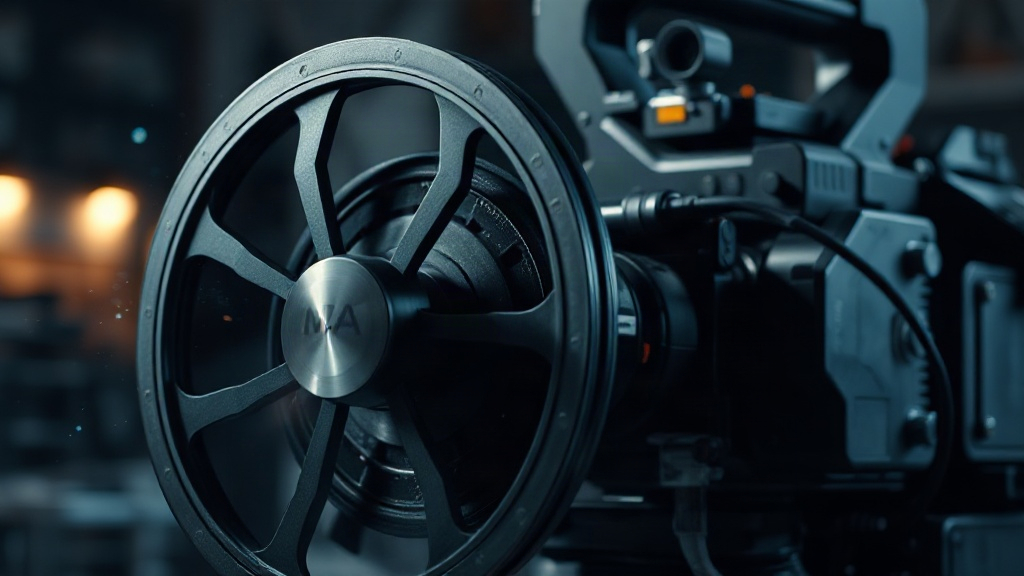
If you have ever been on a film set where an IMAX camera starts rolling, the first thing that hits you is the sound. It is not a gentle whir or a soft hum. It is a mechanical roar, a rapid-fire clatter that can drown out dialogue and send sound recordists reaching for their headphones in despair. For all the visual glory these cameras deliver, they come with a notorious acoustic price tag. But why exactly are IMAX cameras so loud, and how do filmmakers cope with it?
The Mechanical Heart of IMAX Cameras
To understand the noise, you have to understand what makes an IMAX camera different from a standard 35mm or even digital cinema camera. Traditional film cameras use 35mm film running vertically, with each frame measuring about 22mm by 16mm. IMAX, on the other hand, uses 70mm film running horizontally, and each frame is a whopping 70mm by 48.5mm. That is roughly 8.3 times the surface area of a standard 35mm frame. More film area means more resolution, more dynamic range, and more of that immersive IMAX look. But it also means a lot more physical movement.
Inside an IMAX camera, the film has to be pulled through the gate at a rate of 24 frames per second, just like any other film camera. But because each frame is so much larger, the film must move faster in terms of linear speed. The intermittent movement, the mechanism that advances the film one frame at a time and holds it rock steady during exposure, has to yank a much heavier and wider strip of film. That yanking action is violent. The film is accelerated from a dead stop to full speed and back to a dead stop 24 times every second. That creates a loud, percussive clatter as the mechanical claws engage and disengage with the film perforations.
Why Bigger Means Louder
Think of it like a car engine. A small four-cylinder engine can be relatively quiet, but a massive V8 with huge pistons thumping away is going to make itself heard. IMAX cameras are the V8s of the film world. The film transport mechanism in an IMAX camera is a heavy-duty piece of engineering. It has to be, because the forces involved are significant. The film itself is thicker and stiffer than 35mm film, and it resists being moved so abruptly. The camera uses powerful motors and robust gears to manage this, and all that mechanical energy produces noise. There is also the issue of the film gate. The larger gate requires a larger pressure plate to hold the film flat, and that plate slams into place with each exposure cycle. Add to that the sound of the film spooling off the supply reel and onto the take-up reel, and you have a symphony of mechanical chaos.
Another factor is the sheer size and mass of the camera body. A fully loaded IMAX camera can weigh over 100 pounds. The body itself acts like a resonating chamber, amplifying the internal clatter. Unlike smaller cameras that can be wrapped in sound-deadening material, IMAX cameras are often used in their raw state because adding soundproofing would make them even bulkier and harder to operate. The result is a camera that can easily produce noise levels in the range of 70 to 80 decibels at close range. To put that in perspective, that is about as loud as a vacuum cleaner or a busy city street. On a quiet set, it is deafening.
The Filmmaker's Dilemma: Sound vs. Image
This noise creates a fundamental problem for directors and sound departments. IMAX cameras are prized for their image quality, especially for large-format productions like Oppenheimer, Dune: Part Two, or the latest Mission: Impossible. But dialogue scenes, which are the backbone of most films, require clean audio. You cannot have an actor delivering an emotional monologue while a mechanical monster is clattering away three feet from their face. So how do filmmakers handle it?
The most common solution is to shoot the scene twice: once with the IMAX camera for the visuals, and once with a quieter camera or even a digital camera for the audio. The actor performs the scene again, and the sound is recorded cleanly. Later, in post-production, the audio is synced with the IMAX footage. This is known as ADR, or Automated Dialogue Replacement, though in many cases it is not automated at all but a manual re-performance. It works, but it is time-consuming and can be frustrating for actors who have to nail the same emotional beat multiple times.
Another workaround is to use blimps or soundproof housings. Some productions have custom-built enclosures that muffle the camera noise, but these are rare and cumbersome. More often, the sound department will use directional microphones placed as far from the camera as possible, and they will ask the camera department to wrap the camera in sound blankets or heavy furniture pads. This can reduce the noise by a few decibels, but it is never enough for a truly quiet set. In many cases, the director simply accepts the noise and plans to replace all dialogue in post. That is why you often see behind-the-scenes footage of IMAX shoots where everyone is wearing earplugs and the actors are yelling their lines just to be heard over the camera.
The Digital Age and the Future of IMAX Noise
With the rise of digital cinema, one might think the noise problem would disappear. Digital cameras like the ARRI Alexa 65 or the Sony Venice can capture stunning images with zero mechanical noise. But IMAX has fought back with its own digital certification program, and many filmmakers still prefer the unique look of 15/70mm film. However, even IMAX has acknowledged the noise issue. The new IMAX film cameras introduced in recent years, such as the ones used on Nope and Oppenheimer, have been redesigned to be quieter. They still make noise, but it is significantly reduced compared to the older models. The trade-off is that they are still film cameras, and film cameras will always have some mechanical sound. The only truly silent IMAX experience is the digital one, but purists argue that digital cannot replicate the organic grain and color depth of 70mm film.
For now, the loudness of IMAX cameras remains a badge of honor for many cinematographers. It is a sign that you are shooting on the biggest, boldest format available. But for the sound recordists and boom operators who have to work around that noise, it is a constant battle. The next time you watch an IMAX film and marvel at the crisp dialogue, remember that there is a good chance the actors were not actually speaking those lines on set. They were probably shouting over the roar of a camera that sounds like a small helicopter taking off.
Frequently Asked Questions
How loud is an IMAX camera in decibels?
An IMAX camera typically produces noise levels between 70 and 80 decibels at close range. That is comparable to a vacuum cleaner or heavy traffic. The exact level depends on the specific model and whether any soundproofing has been applied, but it is always too loud for recording usable dialogue without special techniques.
Can you soundproof an IMAX camera?
While it is technically possible to build a soundproof housing, it is rarely done because it would make the camera even larger and harder to operate. Most productions use sound blankets or temporary enclosures to reduce the noise by a few decibels, but the camera is never silent. The standard practice is to plan for ADR or use a quieter camera for dialogue scenes.
Do digital IMAX cameras make noise?
No, digital IMAX-certified cameras like the ARRI Alexa LF or the Sony Venice are completely silent because they have no moving mechanical parts. That is one of the main advantages of shooting digital. However, many directors still choose film for its unique texture and dynamic range, accepting the noise as a necessary trade-off.