
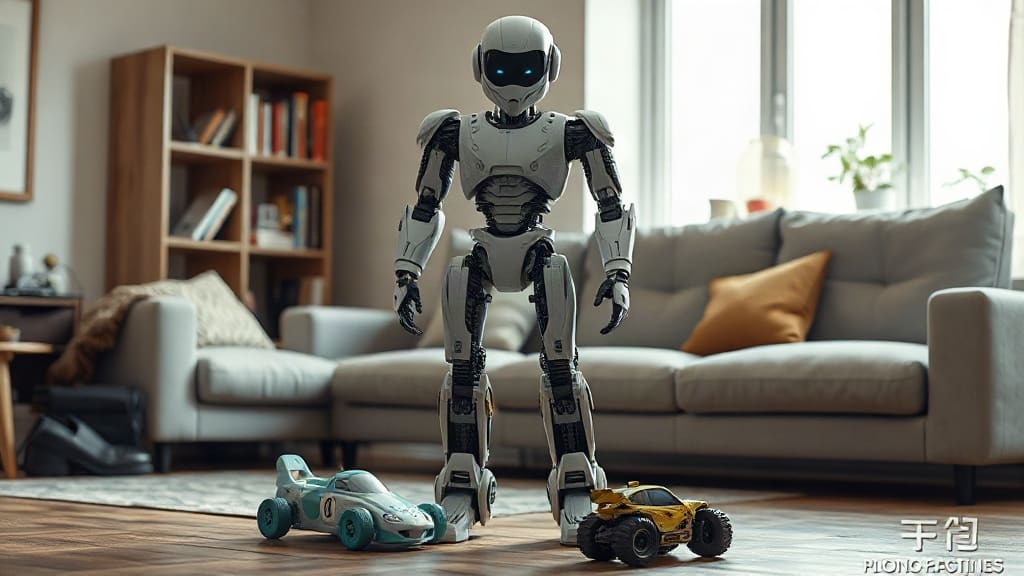
The promise has been dangled for decades: a tireless, human-shaped machine that greets you at the door, tidies the living room, and maybe even mixes a cocktail. It's the robot butler dream, a vision so persistent that it feels inevitable. Yet every year, the reality check lands like a stumble on a thick rug. The truth is, the robot butler dream doesn't have legs, and until it does, those sleek humanoid prototypes will remain just that: prototypes in carefully staged videos, not helpers in your hallway.
Why legs? Why is bipedal locomotion such a stubborn barrier? After all, we've sent rovers to Mars, built drones that dodge trees, and created robot arms that assemble cars with micron precision. But a robot that can walk into your kitchen, open the fridge, and carry a glass of water without spilling it or falling over is still a moonshot. The reason is that legs are not just a means of getting from A to B; they are a dynamic balancing act that must adapt to every surface, every unexpected obstacle, and every shift in weight. And in a home, the obstacles are endless: rugs, toys, pets, stairs, uneven thresholds, and the unpredictable chaos of daily life.
The Allure and the Illusion of Humanoid Helpers
At this year's CES, the convention floor was crawling with humanoids. They waved, they danced, they lifted boxes with surprising grace. Companies like Figure, Agility Robotics, and Tesla's Optimus project have captured the public's imagination with videos of robots walking, sorting objects, and even making small talk. The message is clear: the age of the general-purpose home robot is near. But look closer, and you'll see the strings. Many of these demos are tightly controlled, with flat floors, clear paths, and pre-programmed tasks. The robot butler of the future is still very much a stage performer, not a household employee.
The gap between demo and deployment is where the dream loses its legs. In a lab or a showroom, sensors can be calibrated, lighting can be controlled, and the floor can be free of clutter. In a real home, the robot must contend with a toddler's toy car underfoot, a cat darting between its ankles, and a pair of shoes left carelessly by the door. Each of these is a potential fall, and a fall for a 150-pound humanoid is not just a bruise; it's a broken joint, a shattered sensor, and a very expensive repair bill. That's why most practical home robots today are not humanoids at all. They are the disc-shaped Roombas that hug the floor, the cylindrical vacuums that map your rooms, and the stationary smart speakers that answer your questions. They don't have legs because legs are a liability, not an asset, in a space designed for humans but full of human mess.
Why Legs Are the Hardest Problem in Robotics
To understand why the robot butler dream doesn't have legs, you have to appreciate the sheer complexity of bipedal walking. Humans make it look easy because we've had millions of years of evolution to perfect it. Our brains process balance, proprioception, and muscle coordination in ways that are still not fully understood. A robot, on the other hand, must do all of this with motors, sensors, and lines of code. Every step requires a continuous loop of sensing the ground, adjusting torque, and predicting the next move. It's a control problem of staggering difficulty, and even the best systems today are far from the fluid, adaptive gait of a human.
Then there's the issue of power. Walking is energy-intensive. A humanoid robot that has to carry its own battery, motors, and computing hardware quickly runs out of juice. The current generation of humanoids can often walk for only an hour or two before needing a recharge. That's fine for a demo, but useless for a butler that's supposed to be on call all day. And when you add the weight of arms, hands, and a head full of cameras and sensors, the power demands only grow. It's a vicious cycle: more capability means more weight, more weight means more power, and more power means a bigger battery, which adds even more weight.
Beyond the technical hurdles, there's the question of cost. A humanoid robot with the dexterity and intelligence to be a true butler would likely cost hundreds of thousands of dollars. For that price, you could hire a human housekeeper for years. The economics simply don't work for the average household. And even for the wealthy, a robot that is fragile, slow, and prone to errors is not a luxury; it's a headache. The robot butler dream, in its current form, is a solution in search of a problem that is already solved more cheaply and effectively by existing technology or human labor.
The Rise of Practical Robots Without Legs
While the humanoids grab headlines, the real progress in home robotics is happening at ground level. Robot vacuums have become astonishingly capable, mapping every room, avoiding obstacles, and even emptying their own bins. Robot mops scrub floors, robot lawn mowers trim the grass, and robot window cleaners scale the glass. These machines don't have legs, and that's precisely why they work. They are specialized, low to the ground, and designed for specific tasks. They don't need to balance because they are inherently stable. They don't need to walk because they roll or slide. And they are affordable, often costing less than a high-end smartphone.
This is the quiet revolution that the humanoid hype obscures. The future of home robotics is not a single, all-purpose humanoid butler; it's a fleet of specialized, legless machines that each do one thing very well. Your Roomba sweeps, your Braava mops, your smart speaker orders groceries, and your robot arm in the kitchen might one day stir the soup. None of them will walk your dog or climb your stairs, but together they can handle a surprising amount of the drudgery of daily life. It's a modular approach that is far more practical, far more affordable, and far more likely to actually ship.
That's not to say humanoids have no future. In structured environments like factories and warehouses, where floors are flat and tasks are repetitive, humanoids could find a niche. Companies like Agility Robotics are already testing their Digit robot in logistics settings, where it can move totes and boxes. But even there, the robot's legs are often a compromise; wheels would be more efficient, but legs are needed to navigate stairs and uneven surfaces. In a home, however, stairs are a feature, not a bug, and a robot that can't climb them is of limited use.
The Missing Intelligence: More Than Just Walking
Even if we solve the leg problem, there's another, even harder challenge: the brain. A robot butler must understand natural language, recognize objects, plan complex tasks, and adapt to new situations. It must know the difference between a wine glass and a water glass, and it must handle both with the right amount of force. It must be able to learn the layout of your home, remember where you keep the spare keys, and anticipate your needs. This is the realm of artificial general intelligence, and it's nowhere near ready. Today's AI can write poems and pass bar exams, but it still struggles to fold a towel reliably. The dexterity and common sense required for household chores are far beyond current capabilities.
This is why the robot butler dream doesn't have legs in more ways than one. The physical legs are the visible symbol of the challenge, but the cognitive legs, the ability to think and act like a human in a human environment, are just as underdeveloped. A robot that can walk but can't figure out how to load a dishwasher is not a butler; it's a very expensive paperweight. And until both the body and the brain are ready, the dream will remain a dream.
The Reality Check: What We Can Expect
So where does that leave us? The robot butler dream is not dead, but it's been delayed indefinitely. The technology is advancing, but the gap between a controlled demo and a chaotic home is still vast. For the foreseeable future, the closest thing to a robot butler you'll find is a combination of smart home devices, robot vacuums, and maybe a robot arm that can make a decent cup of coffee. The humanoid robots will continue to impress in videos and trade shows, but they won't be knocking on your door anytime soon, because they can't even walk up the steps.
That's not a failure of imagination; it's a recognition of reality. The dream of a robot butler is a powerful one, and it has driven incredible innovation. But the path to that dream is not a straight line; it's a winding road filled with technical dead ends and economic detours. The robots that will actually enter our homes in the coming years will be less like C-3PO and more like a swarm of specialized, legless helpers. They won't have legs, but they'll get the job done. And maybe, just maybe, that's enough.
Frequently Asked Questions
Why don't we have robot butlers yet?
We don't have robot butlers yet because the technology is not mature enough. Bipedal walking is incredibly complex and energy-inefficient, and the artificial intelligence required for general household tasks is still in its infancy. Current robots are either specialized for single tasks like vacuuming or are expensive prototypes that only work in controlled environments.
Will humanoid robots ever be able to walk reliably in homes?
It's possible, but it will likely take many more years of research. The challenge is not just walking but walking safely in unpredictable environments with obstacles, uneven floors, and pets. Until robots can match human agility and adaptability, they will be limited to flat, controlled spaces.
What is the most advanced home robot available today?
The most advanced home robots today are not humanoids but specialized devices. Robot vacuums like the iRobot Roomba j7+ and robo-mops like the Braava Jet are highly capable, with advanced navigation and obstacle avoidance. Some robot arms, like the Moley kitchen robot, can cook meals, but they are expensive and not widely adopted.
How much would a robot butler cost if it were available?
If a fully functional robot butler were available today, it would likely cost hundreds of thousands of dollars, putting it out of reach for most households. The cost of hardware, sensors, and AI development is enormous, and economies of scale have not yet been achieved for humanoid robots.
Are there any humanoid robots being tested in real homes?
Yes, some companies are testing humanoid robots in real home environments, but these are early-stage pilots. For example, Amazon has tested its Astro robot in homes, but Astro is wheeled, not legged. Humanoids like Tesla's Optimus are still primarily in lab or factory settings, not residential homes.