
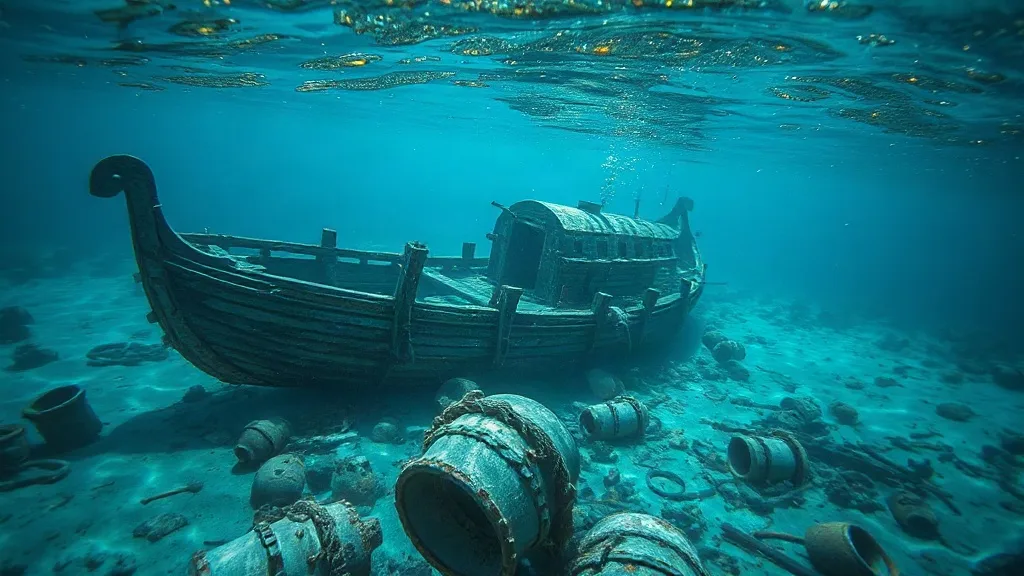
Beneath the turquoise waters off Turkey's southwestern coast, a team of underwater archaeologists has uncovered a vessel that sailed the seas nearly five millennia ago. The wreck, dated to approximately 4,700 years ago during the Early Bronze Age, is now recognized as the oldest known shipwreck in the world. Its discovery, announced after years of careful excavation and analysis, pushes back the timeline of organized maritime trade and offers a rare window into the lives of ancient seafarers who navigated the Aegean and Mediterranean long before the rise of classical Greece.
A Discovery That Rewrites the Timeline
The wreck was found in deep waters, beyond the reach of casual divers, which likely contributed to its exceptional preservation. According to archaeologists, the ship's cargo and structural remains date to the Early Bronze Age, a period when metalworking was in its infancy and long-distance trade networks were just beginning to stitch together distant communities. The vessel is thought to have been a merchant ship, carrying goods that would have been valuable commodities in the ancient world. While the exact nature of the cargo is still being studied, the mere existence of such a ship at this early date suggests that seafaring was far more advanced than previously believed.
What makes this find particularly significant is its age. Previously, the oldest known shipwrecks dated to around 3,000 to 3,500 years ago, from the Late Bronze Age. This new discovery predates them by more than a millennium, forcing scholars to reconsider when and how ancient societies began to traverse the open sea for trade rather than merely hugging the coastline. The Early Bronze Age shipwreck represents a leap in our understanding of prehistoric technology and economic organization.
What the Wreck Tells Us About Ancient Seafaring
The ship's remains, though scattered and degraded by centuries under the sea, have yielded clues about its construction and purpose. Archaeologists have recovered fragments of the hull, personal belongings of the crew, and traces of the cargo. These artifacts are still undergoing analysis, but early reports suggest that the ship was built from sturdy timber and may have been propelled by both oars and a simple sail. Such a design would have allowed it to undertake journeys of considerable distance, perhaps connecting the Aegean coast with Cyprus, Crete, or even Egypt.
The crew's possessions, including tools and pottery, hint at a life of hardship and adventure. Sailing in the Early Bronze Age was a perilous endeavor. Without modern navigation instruments, sailors relied on stars, wind patterns, and coastal landmarks. Storms could arise without warning, and pirates or rival traders posed constant threats. The fact that this ship sank and was preserved suggests it met a sudden end, perhaps in a storm or a collision. Its discovery gives us a tangible link to the risks these ancient mariners took to obtain exotic goods like obsidian, copper, and luxury items.
Trade Networks of the Early Bronze Age
Long before the Silk Road, a web of maritime routes connected the eastern Mediterranean. The Early Bronze Age trade networks were essential for the exchange of raw materials and finished goods. Copper from Cyprus, tin from Anatolia, and precious stones from Afghanistan have been found in sites across the region, indicating that goods traveled vast distances. This shipwreck likely played a role in that system, carrying cargo from one port to another. By studying its remains, researchers hope to map out the specific routes and commodities that fueled the first great era of globalization.
One of the most intriguing aspects of the find is the potential for organic materials to survive. In deep, cold, and low-oxygen waters, items like rope, wood, and even food remains can be preserved for millennia. If such materials are found, they could provide unprecedented details about daily life on board, from the diet of the sailors to the techniques used in shipbuilding. Each new artifact adds a piece to the puzzle of how ancient societies innovated and adapted to their environment.
The Challenges of Underwater Archaeology
Recovering a shipwreck from thousands of years ago is a logistical and technological feat. The site lies at a depth that requires specialized equipment and experienced divers. Working under water is slow and meticulous; every artifact must be carefully documented in situ before being brought to the surface. Conservators then must stabilize the objects, which have been altered by saltwater and pressure, to prevent them from deteriorating once exposed to air. The process can take years, and the analysis even longer.
Funding and international collaboration are also crucial. The excavation off Turkey's coast involves a team of archaeologists, conservators, and specialists from multiple countries. Their work is painstaking but rewarding, as each discovery adds to the collective knowledge of human history. The Turkish government has been supportive, recognizing the cultural and scientific value of the wreck. As the project continues, more details will emerge, and the full story of this ancient voyage will gradually come to light.
Preservation and Future Research
The exceptional preservation of the wreck is a double-edged sword. While it offers a wealth of information, it also means that the site is fragile and must be protected from looters and unintended damage. The exact location is being kept confidential to prevent disturbance. In the coming years, researchers plan to use advanced imaging techniques, such as 3D scanning and DNA analysis of any organic residues, to extract maximum data without harming the site. This approach reflects a growing trend in archaeology: to study artifacts in their original context as much as possible, leaving them in place when feasible.
Beyond the technical achievements, the discovery serves as a reminder of our shared human heritage. The sailors who perished on this voyage were individuals with hopes, skills, and knowledge. Their story, though silent for millennia, now speaks to us across time. It challenges us to think about how ancient people perceived the sea: not as a barrier, but as a highway for ideas, goods, and cultures. The oldest shipwreck off Turkey is not just a relic; it is a testament to the enduring human spirit of exploration.
Why This Matters Today
In an age of global supply chains and instant communication, it is easy to forget that the roots of international trade stretch back to the dawn of civilization. This shipwreck demonstrates that even in the Early Bronze Age, people were connected by complex economic and social ties. It also highlights the importance of preserving underwater cultural heritage. As climate change and coastal development threaten many archaeological sites, the deep sea remains one of the last frontiers for discovery. Each find like this one enriches our understanding of the past and inspires future generations to explore.
For Turkey, the wreck is a point of national pride and a potential boon for tourism and education. Museums may eventually display some of the artifacts, allowing the public to connect with this ancient story. Meanwhile, scholars will continue to debate the implications: Did this ship belong to a known culture, such as the Minoans or the Cycladic people? What can its construction tell us about technological innovation? The answers will emerge as research progresses, but one thing is certain: this discovery has permanently altered our view of prehistoric seafaring.
Frequently Asked Questions
How old is the world's oldest shipwreck found off Turkey?
It is approximately 4,700 years old, dating to the Early Bronze Age.
Where exactly was the shipwreck discovered?
It was found off the coast of Turkey, in the Aegean or Mediterranean region. The precise location is being kept confidential to protect the site.
What was the ship carrying?
The cargo is still being analyzed, but it likely included trade goods such as copper, obsidian, or pottery. Further study will reveal more details.
Why is this discovery important for archaeology?
It pushes back the known history of maritime trade by over a thousand years and provides rare insights into Early Bronze Age technology, economy, and daily life.
Will the artifacts be displayed in a museum?
Eventually, some artifacts may be exhibited after conservation. The process takes time, but the public may one day see these ancient objects.