
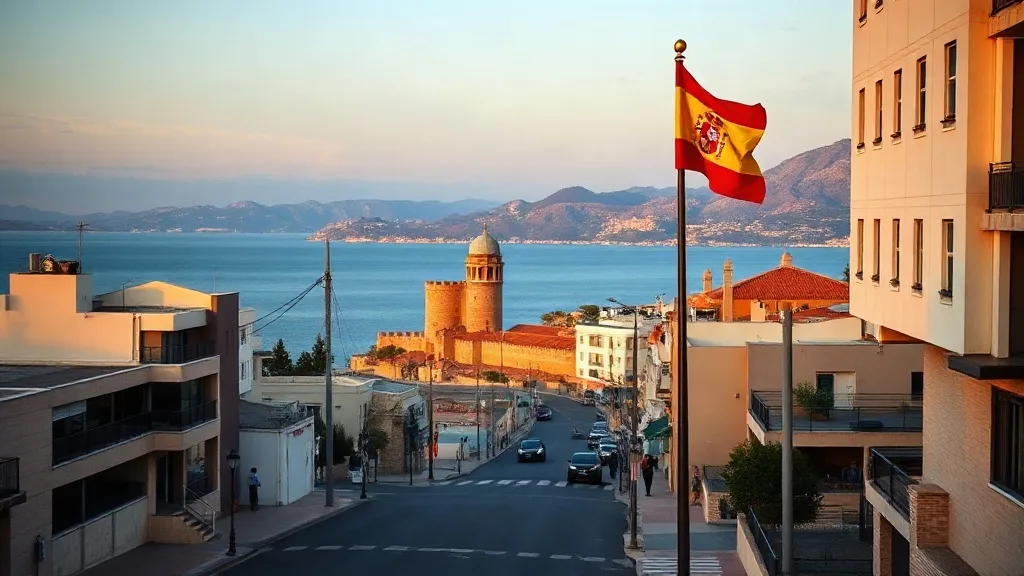
When King Felipe VI and Queen Letizia step onto the soil of Ceuta in the coming weeks, they will do so not merely as ceremonial figures but as symbols of a nation grappling with one of its most sensitive border challenges. The Spanish enclave on the North African coast, a territory that has been part of Spain for centuries, found itself at the center of a migration surge this summer that tested its resources, its social fabric, and its relationship with Madrid and Brussels. The royal visit, announced after weeks of tension, is being framed as a gesture of solidarity and a recognition of the enclave's strategic importance. But beyond the pomp and protocol, the trip raises profound questions about how Spain and the European Union manage migration in a region where geography, history, and human desperation collide.
The Summer That Shook Ceuta
Ceuta's summer began with a familiar pattern: small groups of migrants attempting to cross the border from Morocco, often risking their lives to reach European soil. But by July, the numbers had swelled dramatically. According to local authorities, hundreds of people, many from sub-Saharan Africa, tried to enter the enclave in a matter of days. The influx overwhelmed reception centers, which were already operating near capacity. Local charities warned of shortages in food, medicine, and bedding. The images that circulated on social media showed exhausted families huddled outside overcrowded facilities, while police and border guards struggled to maintain order.
The crisis was not just about numbers. It exposed deep-seated anxieties within Ceuta's population of around 85,000, where roughly half are of Moroccan descent. For years, the enclave has prided itself on a unique coexistence between Christians, Muslims, and secular Spaniards. But the sudden arrival of so many newcomers, combined with economic stagnation and high youth unemployment, fueled resentment and fear. Some residents complained that the central government in Madrid had been slow to respond, leaving local services to cope alone. Others pointed fingers at Morocco, accusing Rabat of loosening border controls to pressure Spain over broader diplomatic disputes. The Moroccan government has denied such claims, but the timing of the surge, coming amid tensions over Western Sahara and Spain's stance on the disputed territory, raised eyebrows in diplomatic circles.
Why the Royal Visit Matters
Royal visits to Ceuta are rare. The last time King Felipe and Queen Letizia traveled to the enclave was in 2018, a trip that itself sparked controversy in Morocco, which considers Ceuta and nearby Melilla as occupied territories. This time, the stakes are higher. The visit is scheduled for early October, according to the royal household, and will include meetings with local officials, humanitarian workers, and representatives of civil society. The king is expected to tour a reception center for migrants and to meet with security personnel who have been on the front lines. The queen will visit a social project that supports vulnerable families, both local and migrant.
But the symbolism goes beyond empathy. By sending the head of state, the Spanish government is signaling that Ceuta is not a forgotten outpost but a full part of the national territory, deserving of attention and investment. It is also a message to the European Union, which has long treated Ceuta and Melilla as Spain's problem rather than a shared European challenge. Spain has repeatedly called for a more coordinated EU response to migration, including a fair distribution of asylum seekers and increased funding for border management. The royal visit is likely to amplify that call, putting pressure on Brussels to act.
The Human Dimension
Behind the political calculations lie individual stories of hardship and hope. Take the case of Amina, a 22-year-old from Guinea who arrived in Ceuta in July after a perilous journey that took her through Mali, Algeria, and Morocco. She now lives in a temporary shelter on the outskirts of the city, waiting for her asylum claim to be processed. "I left my country because I had no future there," she said, speaking through an interpreter. "In Ceuta, at least I am safe. But the conditions are difficult. We sleep on mattresses on the floor, and there is never enough food." Amina's story is one of thousands. Local NGOs estimate that over 1,200 migrants arrived in Ceuta this summer, a 40% increase from the previous year. Most are young men, but there are also women and children, including unaccompanied minors who are particularly vulnerable.
The Spanish government has pledged to improve conditions, but progress has been slow. A new reception center is under construction, but it will not be ready until next year. In the meantime, authorities have been forced to use temporary facilities, including a converted warehouse near the port. The royal visit will draw attention to these shortcomings, and local activists hope it will lead to concrete commitments. "We don't need more visits; we need solutions," said a spokesperson for a Ceuta-based migrant support group. "The king's presence is welcome, but it must be followed by action."
Morocco's Role and Diplomatic Fallout
No discussion of Ceuta's migration crisis is complete without considering Morocco. The kingdom has long used migration as a bargaining chip in its relations with Spain and the EU. In 2021, Morocco allowed thousands of migrants to cross into Ceuta after Spain granted medical treatment to a Western Sahara independence leader. That episode strained ties for months. This summer's surge was smaller but still significant. Analysts believe Morocco is signaling its displeasure over Spain's support for a UN resolution that called for a referendum on Western Sahara's future, a move Rabat fiercely opposes.
The royal visit is a delicate diplomatic dance. Spain wants to show support for Ceuta without provoking Morocco further. The Spanish foreign ministry has emphasized that the trip is purely domestic and not directed at any third country. But Morocco's reaction will be closely watched. In 2018, Morocco recalled its ambassador to Spain for consultations after the previous royal visit, though the envoy returned after a few weeks. This time, Rabat has remained publicly silent, but diplomatic sources suggest it is monitoring the situation. A misstep could reignite tensions and even lead to another migration surge, which neither side wants.
What Lies Ahead for Ceuta
The royal visit is a moment of visibility, but it will not solve Ceuta's structural problems. The enclave's economy depends heavily on cross-border trade and EU funds, both of which are vulnerable to political instability. Its demographic balance is shifting, with a growing Muslim population that feels increasingly marginalized. And its geographic position makes it a perpetual target for migrants seeking a better life in Europe. Addressing these issues requires more than a royal photo opportunity. It demands a comprehensive strategy that includes investment in local infrastructure, integration programs for newcomers, and a coherent EU migration policy that shares responsibility among member states.
King Felipe's visit may not deliver all that, but it can set a tone. By acknowledging Ceuta's plight, the king can help bridge the divide between the enclave and mainland Spain, which often views the territory as a distant, exotic outlier. He can also use his platform to urge European leaders to take a more humane and effective approach to migration. Whether he will do so remains to be seen. For now, Ceuta waits, hoping that the royal spotlight will bring not just sympathy but real change.
Frequently Asked Questions
Why is King Felipe VI visiting Ceuta now?
The visit comes after a summer migration surge that strained Ceuta's resources and social cohesion. It is intended to show royal support for the enclave and to highlight the need for a coordinated European response to migration.
What happened during the summer migration crisis in Ceuta?
In July and August, over 1,200 migrants, mostly from sub-Saharan Africa, attempted to enter Ceuta from Morocco. Reception centers were overwhelmed, leading to shortages and tensions among local residents. The surge was linked to diplomatic tensions between Spain and Morocco.
How has Morocco responded to the planned royal visit?
Morocco has not officially commented, but it historically views royal visits to Ceuta as provocative. In 2018, it recalled its ambassador after a similar visit. This time, Rabat is likely to monitor the trip closely and may react if it perceives any challenge to its claims over Ceuta.
What does the royal visit mean for the migrants in Ceuta?
Migrants hope the visit will draw attention to their living conditions and lead to faster asylum processing and better facilities. However, without concrete policy changes, the impact may be limited to symbolic support.
Will the visit change Spain's approach to migration in Ceuta?
While the visit itself does not change policy, it could increase pressure on the Spanish government and the EU to invest in Ceuta's reception infrastructure and to develop a more equitable distribution of migrants across Europe.