
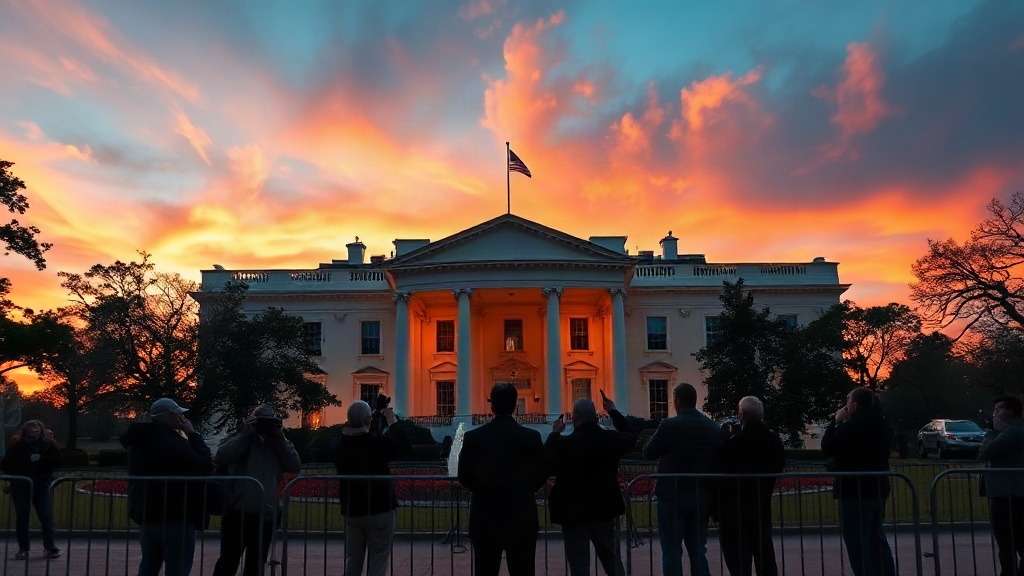
The battle over press access to the White House took a sharp legal turn this week as three major news organizations, CNN, MS Now, and Politico, formally asked a federal judge to block the Trump administration's ban on their reporters from covering the president. The motion, filed in federal court, argues that the administration has persisted in unpredictably and inconsistently implementing its ban despite an existing restraining order, leaving the news outlets with no choice but to seek urgent judicial relief.
At issue is a directive that bars journalists from these organizations from entering the White House grounds, attending press briefings, or traveling on Air Force One. The ban, which the administration has defended as a necessary response to what it calls unfair coverage, has been criticized by press freedom advocates as a brazen violation of the First Amendment. Now, the case is heading toward a pivotal courtroom showdown that could redefine the boundaries between the executive branch and the media.
The Road to Court: How We Got Here
The conflict began earlier this year when the White House revoked the hard passes of several reporters from the three outlets. According to court documents, the administration cited a range of grievances, from what it described as "biased reporting" to the outlets' refusal to adopt the term "Gulf of America" in their coverage. The ban was initially met with a temporary restraining order from a federal judge, which required the administration to restore access while the case proceeded.
But the news organizations say the administration has not complied in good faith. In their latest filing, they claim that the ban has been applied erratically: some reporters are allowed in for certain events, while others are turned away without explanation. This inconsistency, they argue, creates a chilling effect, making it impossible for newsrooms to plan coverage or for the public to receive consistent information about the president's activities.
"The administration's approach has been to keep us guessing," said a lawyer for one of the outlets, speaking on condition of anonymity because the case is ongoing. "One day a reporter is allowed in, the next day they're not. That's not how a restraining order is supposed to work."
What the News Organizations Are Asking For
In their motion, CNN, MS Now, and Politico are asking the court to issue a preliminary injunction that would block the ban entirely until the case is resolved. They argue that the ban violates the First Amendment's guarantee of freedom of the press and the Fifth Amendment's due process clause. Specifically, they contend that the White House cannot exclude journalists based on the content of their reporting, as that constitutes viewpoint discrimination.
The motion also highlights the practical harm the ban has caused. Without access, the outlets say they cannot fulfill their role as watchdogs, informing the public about the actions of their government. They point out that the White House press corps is a vital institution, and that excluding specific organizations undermines the public's right to know.
Legal experts suggest that the news organizations have a strong case. "The Supreme Court has repeatedly held that the government cannot use access to public facilities as a tool to punish or silence disfavored speakers," said a constitutional law professor at a major university. "The White House is a public forum, and while the president can set reasonable rules for access, those rules cannot be applied arbitrarily or based on the content of coverage."
The Administration's Defense
The Trump administration has defended the ban as a lawful exercise of the president's authority to control access to his own residence and workplace. In previous court filings, Justice Department lawyers argued that the president has broad discretion to decide who may enter the White House and that the press has no special right of access beyond what the government chooses to grant.
They also claim that the ban is not based on viewpoint but on what they describe as the outlets' failure to adhere to professional standards. However, critics note that the administration has not provided specific evidence to support this claim, and that the timing of the ban, coming after critical coverage of the president, suggests retaliation.
White House Press Secretary did not respond to a request for comment for this story. But in a statement earlier this month, a spokesperson said the administration is committed to transparency and that the president will continue to engage with a wide range of media outlets.
Why This Case Matters Beyond the Beltway
This legal fight is about more than just three news organizations. It touches on fundamental questions about the relationship between the press and the government in a democratic society. If the White House can ban outlets it dislikes, what's to stop future administrations from doing the same? And if the courts uphold such a ban, what does that mean for the public's ability to hold power accountable?
Press freedom groups have rallied behind the news organizations. The Committee to Protect Journalists called the ban "a dangerous escalation in the administration's war on the free press." Meanwhile, some conservative commentators have praised the move, arguing that the mainstream media has long been biased against Trump and that it's time for a change.
Regardless of where one stands politically, the case raises uncomfortable questions about the limits of executive power. The outcome will likely set a precedent for how future presidents can interact with the media, and it could shape the flow of information to the American public for years to come.
What Happens Next?
The federal judge overseeing the case has scheduled a hearing for next week to consider the motion for a preliminary injunction. Both sides will present their arguments, and the judge could rule from the bench or take time to issue a written decision. If the injunction is granted, the ban will be lifted while the case proceeds. If not, the news organizations may appeal to a higher court.
In the meantime, the three outlets continue to cover the White House, albeit with reduced access. They have relied on alternative methods, such as attending off-site events and interviewing officials outside the grounds. But they say that's no substitute for being in the room where decisions are made.
As one veteran White House correspondent put it: "We're not asking for special treatment. We're asking for the same access that every other outlet gets. That's what the First Amendment promises, and that's what we're fighting for."
Frequently Asked Questions
What exactly is the White House ban on news organizations?
The ban refers to a directive from the Trump administration that prevents reporters from CNN, MS Now, and Politico from entering the White House, attending press briefings, or traveling on Air Force One. It was implemented after a federal judge had already issued a restraining order that was supposed to keep access open.
Why are these news organizations suing the administration?
They argue that the ban violates their First Amendment rights by punishing them for their coverage. They also say the administration has applied the ban inconsistently, making it impossible to plan coverage and creating a chilling effect on press freedom.
What is a preliminary injunction and why is it important here?
A preliminary injunction is a court order that prohibits a party from taking certain actions while a lawsuit is ongoing. Here, the news organizations are asking the judge to block the ban until the full case is resolved, so they can regain access in the meantime.
How could this case affect other news outlets?
If the court rules in favor of the news organizations, it would reinforce the principle that the government cannot exclude journalists based on viewpoint. A ruling for the administration could embolden future presidents to restrict access to outlets they dislike, potentially setting a precedent that weakens the free press.
What has been the public reaction to the ban?
Reactions have been divided along partisan lines. Press freedom advocates and many Democrats have condemned the ban as an attack on democracy, while some Republicans and Trump supporters have defended it as a necessary response to biased media coverage.