
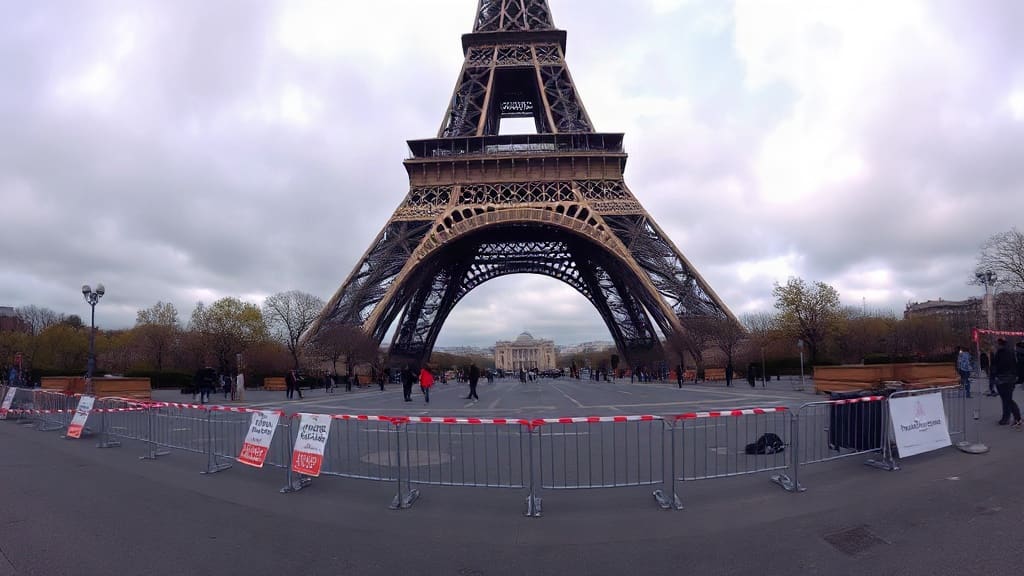
It was supposed to be just another busy Monday at one of the world's most recognizable monuments. Instead, the Eiffel Tower stood silent and closed to visitors on March 17, 2025, after a group of female employees staged an unexpected walkout. The reason? They had been told to stay away from certain areas because a high-profile religious delegation was touring the site, and only male staff were assigned to accompany the group. The incident has now triggered a formal investigation and ignited a wider conversation about gender equality and religious accommodation in the French workplace.
The walkout, which lasted the entire day, forced the tower's operator to refund thousands of pre-booked tickets and turn away countless tourists. For a monument that welcomes nearly seven million visitors a year, a full-day closure is rare and costly. But for the women who walked out, the principle at stake outweighed the financial hit. They described the decision as discriminatory and humiliating, arguing that their professional roles should not be altered based on the presumed preferences of visitors, no matter how important those visitors might be.
What Exactly Happened at the Eiffel Tower?
According to multiple staff members who spoke anonymously to French media, the incident unfolded early in the morning. A delegation described as a "religious group from the Middle East" was scheduled for a private visit. In preparation, female employees working in public-facing roles on the upper decks and in the elevators were reportedly asked to step aside. Male colleagues were brought in to replace them for the duration of the visit.
One employee told a local news outlet that the instruction came verbally from a supervisor and was justified as a "cultural courtesy" to the guests. But the women affected saw it differently. "We are not invisible," one worker said. "We are trained professionals. Our presence should not be considered offensive." The walkout was organized quickly, with staff gathering near the base of the tower and refusing to return to their posts until management addressed their concerns.
The tower's operator, Société d'Exploitation de la Tour Eiffel (SETE), initially cited "technical difficulties" for the closure. Hours later, the company acknowledged the real reason, calling the situation "regrettable" and promising an internal review. By evening, the Paris prosecutor's office had opened a preliminary investigation into possible discrimination based on sex and religion.
Why This Incident Matters Beyond One Day
At first glance, a one-day closure of a tourist attraction might seem like a minor blip. But the Eiffel Tower is not just any attraction. It is a symbol of the French Republic, a country that prides itself on its strict separation of church and state, known as laïcité. The idea that female employees could be sidelined to accommodate a religious group's perceived modesty rules strikes at the heart of that principle.
In France, workplace discrimination based on sex is illegal under the Labour Code, and religious accommodation in public services is tightly regulated. Private companies operating public monuments must adhere to strict neutrality rules. Legal experts say if the investigation confirms that women were systematically removed from their duties because of their gender, SETE could face significant fines and civil lawsuits.
Beyond the legal dimension, the incident has become a flashpoint in a broader cultural debate. France has struggled for years to balance its commitment to secularism with the rights of religious minorities. High-profile cases involving Muslim women wearing headscarves in schools or public pools have polarized the nation. This latest episode, however, flips the script: it is not about what women wear, but about whether women can be erased from public view to satisfy conservative religious norms.
Reactions from Politicians and Unions
French politicians were quick to weigh in. Several members of parliament from both the left and the center condemned the decision, calling it a "surrender to sexism." The Minister for Gender Equality described the incident as "unacceptable" and pledged to monitor the investigation closely. Far-right leaders, who often position themselves as defenders of secularism, seized on the story to criticize what they called "the Islamization of public spaces," even though the delegation's exact religious affiliation has not been officially confirmed.
Labor unions representing Eiffel Tower staff were more measured but firm. The CGT union, one of France's largest, issued a statement supporting the walkout and demanding written guarantees that no employee would ever be reassigned based on gender. "The management tried to avoid a scandal, but they created a bigger one," the statement read. Union representatives also noted that this was not the first time such a request had been made by visiting dignitaries, though it was the first time staff had collectively refused.
What Does the Law Say?
Under French law, discrimination in the workplace is defined broadly. Article L1132-1 of the Labour Code prohibits any distinction based on sex, religion, or real or supposed ethnic origin. An employer cannot justify such discrimination by citing the preferences of a third party, including a client or visitor. The European Court of Human Rights has also ruled in several cases that customer preference does not constitute a legitimate ground for discriminatory treatment.
If the investigation finds that SETE management explicitly ordered female staff to be replaced, the company could be held liable for direct discrimination. Even if the order came from a lower-level supervisor without official approval, the company could still be found negligent for failing to prevent it. Penalties could include back pay for affected employees, damages for moral harm, and administrative fines.
However, proving discrimination in court can be difficult. The investigation will need to establish a clear chain of command and document exactly what was said. Witness testimony will be crucial, as will any written communications. The fact that the walkout happened immediately and was widely reported may actually help investigators, as it forced the company to acknowledge the incident publicly.
A Pattern of Quiet Accommodation?
Several current and former employees have told journalists that similar requests have been made in the past, though never so publicly. One former elevator operator recalled an incident in 2019 when a visiting delegation from a Gulf state asked that no women operate the lifts. At the time, management quietly complied, and the story never made headlines. "We were told it was just for an hour, just to be polite," she said. "But politeness should not mean hiding women."
These revelations suggest that the practice of gender-based accommodation may be more entrenched than previously thought. It raises uncomfortable questions about how far public institutions are willing to go to attract wealthy visitors or maintain diplomatic ties. The Eiffel Tower, like many landmarks, relies heavily on revenue from private tours and VIP guests. But critics argue that no amount of money should justify compromising fundamental rights.
The Human Cost of the Walkout
For the women who walked out, the decision was not easy. Many are long-term employees who love their jobs and take pride in representing France to the world. One worker, who has been at the tower for over a decade, said she felt "betrayed" by management. "We are not asking for special treatment," she said. "We are asking to be treated as equals. If a guest does not want to see a woman, that is their problem, not ours."
The walkout also had a ripple effect on other staff. Some male colleagues expressed solidarity and joined the protest, while others said they felt caught in the middle. The tower's 300-plus employees are a tight-knit community, and the incident has reportedly caused tension between those who supported the walkout and those who felt it went too far. Management has promised to hold listening sessions, but trust has been damaged.
What Happens Next?
The investigation is expected to take several weeks. Investigators will interview all parties involved, including the women who walked out, their supervisors, and members of the visiting delegation if they can be identified. The Paris prosecutor's office has not released further details, citing the ongoing nature of the inquiry.
In the meantime, SETE has issued a public apology and announced new training programs on diversity and inclusion. The company has also promised to review its protocols for VIP visits to ensure that no employee is ever excluded based on gender. Whether these measures will be enough to satisfy the staff and the public remains to be seen.
For many observers, the incident is a wake-up call. It shows that even in a country with strong anti-discrimination laws, informal practices can undermine those laws in subtle ways. The Eiffel Tower will reopen, and tourists will return. But the question of how France navigates the intersection of religious freedom and gender equality is far from settled.
Frequently Asked Questions
Why did the Eiffel Tower close on March 17, 2025?
The tower closed for a full day because female staff members staged a walkout. They were protesting after being told to step aside and let male colleagues handle a visit by a religious delegation. The staff considered this discriminatory, and the closure was a direct result of their collective action.
Was the religious group's identity ever confirmed?
No official confirmation has been made public. French media reported that the delegation was from the Middle East, but the exact religious affiliation has not been disclosed. The investigation may reveal more details, but for now, the focus remains on the management's decision rather than the visitors themselves.
What are the legal consequences for the Eiffel Tower operator?
If the investigation finds that SETE management ordered female employees to be replaced based on gender, the company could face fines and civil lawsuits under French anti-discrimination laws. The Labour Code prohibits sex-based discrimination, and customer preference is not a valid defense.
Has this ever happened before at the Eiffel Tower?
Several employees have said that similar requests were made in the past, though not as publicly. In some cases, management quietly complied without incident. This time, the staff decided to take a stand, which brought the practice into the open.
What is the broader significance of this incident in France?
The incident touches on France's principle of laïcité, or secularism, and the ongoing debate about how to balance religious accommodation with gender equality. It has reignited discussions about whether public institutions should ever adjust their practices to suit religious customs that may conflict with French values.