
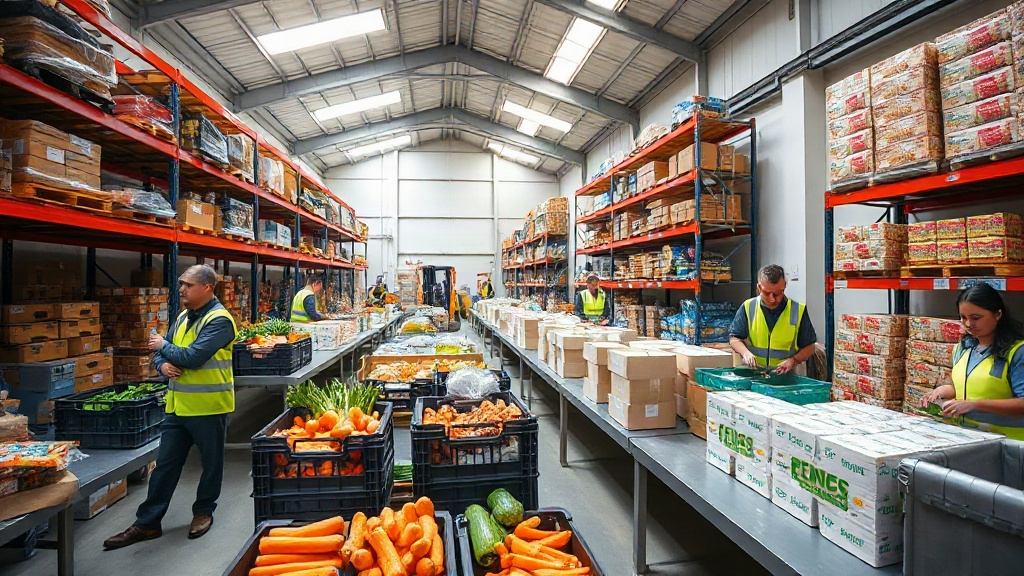
In a city where food poverty and food waste coexist on a staggering scale, a single warehouse in Barking is poised to become a critical bridge between surplus and scarcity. The newly opened Big Heart Food Hub aims to redirect 10 tonnes of food every week to charities across east London and beyond, offering a practical answer to two of the capital's most stubborn problems.
At first glance, 10 tonnes might sound like a modest figure. But when you consider that the average UK household throws away around 1.96 kilograms of food per day, the hub's weekly throughput represents the equivalent of thousands of meals. More importantly, it is food that would otherwise end up in landfill or anaerobic digestion, releasing methane and wasting the resources used to produce it.
What the Big Heart Food Hub Actually Does
The concept is simple but the logistics are anything but. The warehouse acts as a central receiving point for surplus food from supermarkets, wholesalers, manufacturers, and farms. Volunteers and staff sort, quality-check, and repackage the items, then distribute them to a network of local charities, food banks, community kitchens, and shelters.
Unlike a typical food bank, which often relies on direct donations from the public, the hub operates on a food redistribution model that intercepts edible food before it becomes waste. This includes fresh produce with minor blemishes, products with damaged packaging, items approaching their best-before dates, and overstocked lines that retailers no longer want to store.
The hub's location in Barking is strategic. East London has some of the highest rates of child poverty and food insecurity in the UK, while also sitting close to major distribution centres and transport links. Being able to receive large deliveries and quickly redistribute them locally reduces both food miles and the time food spends in the supply chain, which is crucial for perishable items.
Why Food Redistribution Matters More Than Ever
The timing of this opening could hardly be more significant. Food inflation has squeezed household budgets, and demand at food banks has surged. Meanwhile, the food industry continues to generate around 9.5 million tonnes of surplus and waste each year in the UK alone, a figure that environmental groups have long argued is both ethically indefensible and environmentally damaging.
Projects like the Big Heart Food Hub tackle both issues simultaneously. They provide a reliable supply of nutritious food to organisations that are often forced to purchase items themselves or rely on unpredictable donations. For charities, having a consistent source of food means they can plan menus, reduce their own costs, and serve more people with dignity and choice.
From an environmental perspective, redistributing surplus food is one of the most effective ways to reduce the carbon footprint of the food system. According to the waste hierarchy, prevention and redistribution are far better than recycling or energy recovery. Every tonne of food that is eaten rather than disposed of saves the equivalent of several tonnes of CO2 emissions, not to mention the water, land, and labour that went into producing it.
How the Hub Works in Practice
On a typical day, the warehouse receives deliveries from partner businesses. These might be pallets of bread that were baked that morning but not sold, crates of vegetables that are perfectly edible but cosmetically imperfect, or tins with dented labels that supermarkets cannot put on shelves. Volunteers check temperatures, inspect packaging, and separate items into categories: fresh produce, chilled goods, ambient products, and frozen items.
Charities then place orders based on what is available and what their clients need. Some collect directly from the hub, while others rely on the hub's own delivery vans. The system is designed to be responsive; if a large quantity of dairy products arrives unexpectedly, the hub can quickly alert its network and ensure the food reaches fridges and freezers within hours.
The hub also serves as a training and volunteering space, offering local residents the chance to gain skills in logistics, food safety, and warehouse operations. This community dimension is often overlooked but is vital for long-term sustainability. When people feel ownership of a project, they are more likely to support it through donations, advocacy, and word of mouth.
Challenges and Realities
Running a food redistribution warehouse is not without its challenges. Cold storage is expensive to install and maintain. Transport costs can eat into budgets. And the supply of surplus food is not always predictable; a supermarket might have a glut of fresh herbs one week and almost nothing the next. This requires flexible staffing and creative menu planning by recipient charities.
There is also the issue of dependency. Some critics argue that food redistribution can let retailers off the hook, allowing them to continue over-ordering while feeling good about donating the excess. The counterargument is that redistribution is a pragmatic solution to an immediate problem, and that it should be accompanied by efforts to reduce waste at source. The Big Heart Food Hub, like many similar projects, encourages its partners to look at their own supply chains and reduce surplus where possible.
Nevertheless, for the charities and the families they serve, the impact is tangible. A community kitchen in Dagenham might receive enough fresh vegetables to make a nutritious stew for 200 people instead of relying on tinned soup. A food bank in Ilford might be able to offer fresh fruit and bread alongside the usual pasta and rice. These small changes make a real difference to people's health and wellbeing.
What This Means for East London
The opening of the Big Heart Food Hub is part of a broader trend towards more coordinated, professional food redistribution in the capital. While individual food banks and community fridges do valuable work, they often lack the infrastructure to handle large volumes or to store perishable goods safely. Hubs like this one fill that gap, acting as a backbone for the wider charitable food sector.
For local businesses, the hub offers a straightforward way to reduce waste disposal costs and meet corporate social responsibility goals. For residents, it provides a visible example of how surplus food can be put to good use. And for policymakers, it demonstrates that community-led food redistribution can be both efficient and scalable, potentially informing future strategies on food security and waste reduction.
As the hub ramps up to its full capacity of 10 tonnes per week, it will need to build strong relationships with both food donors and recipient charities. The first few months will be critical. If the logistics work smoothly and the food is consistently high quality, word will spread and more partners will come on board. If not, the hub risks becoming another well-intentioned project that fails to deliver on its promise.
Looking Ahead
The Big Heart Food Hub is not a silver bullet for food poverty or food waste, but it is a significant step in the right direction. By creating a reliable, efficient channel for surplus food to reach those who need it, the hub tackles both the symptoms and some of the root causes of a broken food system. It shows that with the right infrastructure and community support, it is possible to turn a problem into a resource.
As one volunteer at the hub put it, the goal is not just to move boxes from one place to another, but to build a network of care that values food and people equally. That ethos, more than any number of tonnes, is what will determine the hub's long-term success.
Frequently Asked Questions
How can local charities register to receive food from the hub?
Charities and community groups in east London can contact the Big Heart Food Hub directly through their website or by phone. They will need to provide basic information about their organisation, their food storage facilities, and the number of people they serve. The hub typically conducts a short assessment to ensure food safety standards can be met, then adds the charity to its distribution list.
What types of food does the hub redistribute?
The hub handles a wide range of surplus food, including fresh fruit and vegetables, bread, dairy products, chilled ready meals, frozen items, and ambient goods like pasta, rice, and tinned food. All items are checked for quality and safety before being offered to charities. The mix varies from day to day depending on what donors provide.
Can individuals volunteer at the Big Heart Food Hub?
Yes, the hub welcomes volunteers for a variety of roles, including sorting and packing food, driving delivery vans, helping with administration, and supporting community outreach. No previous experience is necessary, and training is provided. Volunteering slots are typically available on weekdays and some weekends, and interested individuals can sign up through the hub's website.
How does the hub ensure food safety and hygiene?
The hub follows strict food safety protocols in line with UK regulations. All staff and volunteers receive training in food hygiene, and the warehouse is equipped with temperature-controlled storage areas. Food is inspected on arrival, and any items that are damaged, past their use-by date, or otherwise unsafe are removed and disposed of responsibly.
Is the Big Heart Food Hub part of a larger network?
The hub operates independently but collaborates with other food redistribution organisations, local authorities, and national programmes such as FareShare and the Felix Project. This allows it to share best practices, access surplus food from larger donors, and coordinate deliveries to avoid duplication of effort.