
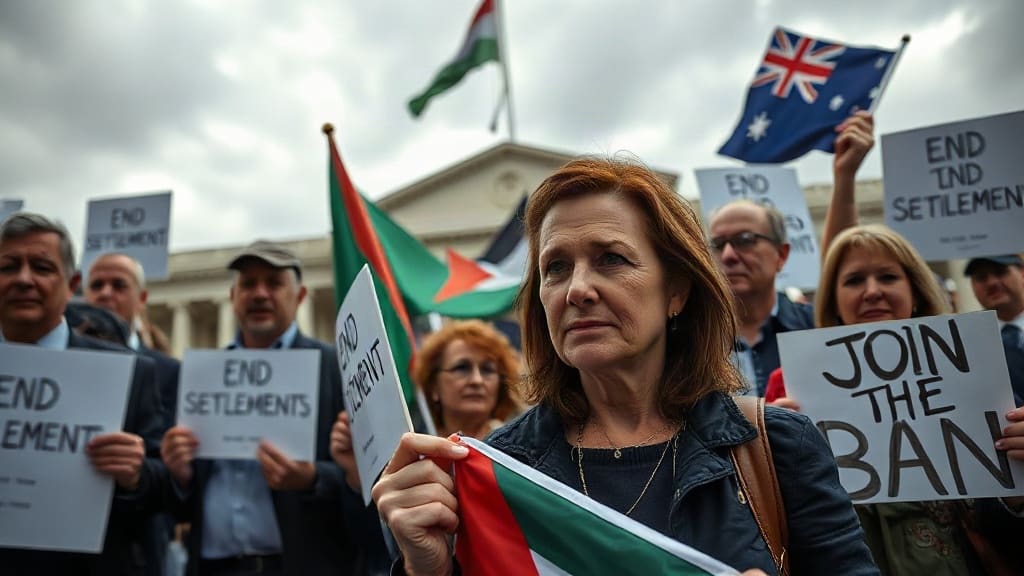
When the United Kingdom, Canada, and France announced coordinated measures to ban trade with Israeli settlements in the West Bank, many expected Australia to follow. Instead, Canberra held back, and that hesitation has now triggered a sharp backlash from within the Labor Party itself. The Labor Friends of Palestine group has formally criticized the government's decision, calling for a stronger response to ongoing violence against Palestinians. This internal tension exposes a growing divide between Australia's traditional alliances and the moral imperatives of international law.
What exactly did Australia decide?
Australia's federal government confirmed that it would not join the trade ban announced by its allies. While the UK, Canada, and France moved to prohibit commerce with illegal Israeli settlements, Australia opted for a more cautious approach. The government has not ruled out future measures, but for now it is avoiding direct economic sanctions on settlement goods and services. This decision came despite increasing international consensus that settlements violate the Fourth Geneva Convention and undermine the viability of a two-state solution.
The Labor Friends of Palestine group, which includes members of parliament and grassroots party members, wrote to Foreign Minister Penny Wong on Wednesday. Their message was direct: Australia should join the coordinated approach with allied countries and align its policy with the party's national platform. That platform, updated in July, now explicitly supports recognition of Palestine and stronger action against settlement expansion. The group argues that failing to act makes Australia complicit in the economic viability of settlements.
Why the party platform matters
The Labor Party's national platform is not just a symbolic document. It guides policy direction and sets expectations for elected representatives. In July, the platform was amended to include language supporting Palestinian statehood and opposing settlement activity. That change was seen as a significant shift, reflecting grassroots pressure and changing public opinion. Now, the refusal to join allied sanctions appears to contradict that platform, leaving many members frustrated.
Labor Friends of Palestine is not a fringe group. It includes sitting MPs, senators, and influential union figures. Their criticism carries weight because it signals that the government's cautious stance may not hold within its own ranks. One member described the decision as "a missed opportunity to stand on the right side of history." Others have pointed out that Australia's position looks increasingly isolated among like-minded democracies.
The international context
The UK, Canada, and France did not act in a vacuum. Their coordinated trade ban followed a series of violent incidents in the West Bank, including settler attacks on Palestinian villages and the expansion of outposts deemed illegal under Israeli law. Human rights organizations have long documented the economic impact of settlements, which rely on exports to sustain their growth. By banning trade with these entities, the three countries aimed to apply pressure without severing diplomatic ties.
Australia's decision not to join suggests a preference for quiet diplomacy over public sanctions. The government has cited the need to maintain influence with Israel and avoid escalating tensions. But critics argue that this approach has yielded little progress, while Palestinian communities continue to face displacement and violence. The Labor Friends of Palestine letter specifically references "violence against Palestinians" and calls for a response that matches the gravity of the situation.
What are the possible consequences?
In the short term, the internal backlash may force the government to clarify its position. Foreign Minister Wong has previously expressed concern about settlement expansion, but she has stopped short of endorsing trade bans. With party members publicly urging action, she may face pressure to outline a more concrete policy. This could include targeted measures against individuals involved in settler violence or a review of trade agreements that indirectly benefit settlements.
In the longer term, the divide within Labor could influence Australia's foreign policy direction. If the party's left flank gains momentum, future platforms may mandate stronger action. Conversely, if the government successfully defends its cautious approach, the issue may fade from the agenda. Much depends on whether the UK, Canada, and France see tangible results from their trade bans. If those measures reduce settlement expansion, Australia will face renewed calls to follow suit.
Public opinion and political risk
Australian public opinion on Israel and Palestine has shifted in recent years. Polls suggest growing sympathy for Palestinians, particularly among younger voters. At the same time, there remains strong bipartisan support for Israel's right to exist. Navigating this terrain is difficult for any government. A trade ban on settlements could alienate some voters while energizing others. The Labor government, elected on a platform of progressive change, must weigh these factors carefully.
The Labor Friends of Palestine group understands this political reality. Their letter is not merely a protest; it is a strategic move to shift the debate. By framing the issue as one of consistency with the party platform, they aim to make inaction politically costly. If enough MPs publicly support the call, the government may feel compelled to act, even if only symbolically at first.
A test for Australia's values
At its core, this debate is about what Australia stands for. The country has long positioned itself as a champion of international law and human rights. Yet its refusal to join allied sanctions on settlements raises questions about that commitment. Israeli settlements in the West Bank are widely considered illegal under international law, and their continued expansion undermines peace efforts. By declining to take economic action, Australia may be seen as tolerating a status quo that many consider unjust.
Supporters of the government's stance argue that sanctions are blunt instruments that can harm ordinary Palestinians. They also point out that Australia's trade with settlements is minimal, so a ban would be largely symbolic. But symbolism matters in international relations. Joining the UK, Canada, and France would send a clear signal that Australia prioritizes international law over short-term diplomatic comfort. The Labor Friends of Palestine believes that signal is long overdue.
What happens next?
The coming weeks will be crucial. The government has not formally responded to the letter from Labor Friends of Palestine, but Foreign Minister Wong is expected to address the issue in parliament. Backbench MPs may raise the matter during question time, forcing a public debate. Meanwhile, grassroots activists are planning campaigns to pressure local representatives. The outcome could shape Australia's Middle East policy for years to come.
For now, the ball is in the government's court. It can either double down on its cautious approach or signal a willingness to reconsider. Given the strength of feeling within the party, the latter may be more likely. But even a small shift, such as supporting a UN resolution on settlement illegality, would mark a change. The Labor Friends of Palestine will be watching closely.
Frequently Asked Questions
Why did Australia decide not to join the sanctions on Israeli settlements?
Australia's government has stated it prefers to maintain diplomatic channels with Israel and avoid measures that could escalate tensions. It also argues that Australia's trade with settlements is minimal, making a ban mostly symbolic. However, critics say this stance contradicts the Labor Party platform and undermines international law.
What is the Labor Friends of Palestine group asking for?
The group is urging Foreign Minister Penny Wong to join the coordinated trade ban with the UK, Canada, and France. They also want Australia to align its policy with the party platform, which supports Palestinian recognition and opposes settlement expansion. Their letter calls for a stronger response to violence against Palestinians.
How have other countries responded to Israeli settlements?
The UK, Canada, and France recently announced a ban on trade with Israeli settlements in the West Bank. This coordinated action aims to pressure Israel to halt settlement expansion. Other countries, including Ireland and Norway, have also taken steps to distinguish between Israel and the occupied territories in trade and labeling.
What impact could these sanctions have on the ground?
Trade bans on settlements can reduce their economic viability by limiting export markets. This may slow expansion and signal international disapproval. However, the impact is often limited because settlements also rely on domestic Israeli markets and government subsidies. The symbolic effect is often as important as the economic one.
Will Australia change its policy in the near future?
It is possible, especially given the internal pressure from Labor Friends of Palestine. The government may introduce targeted measures, such as sanctions on individuals involved in settler violence, rather than a full trade ban. Much depends on political calculations and how the allied sanctions play out.