
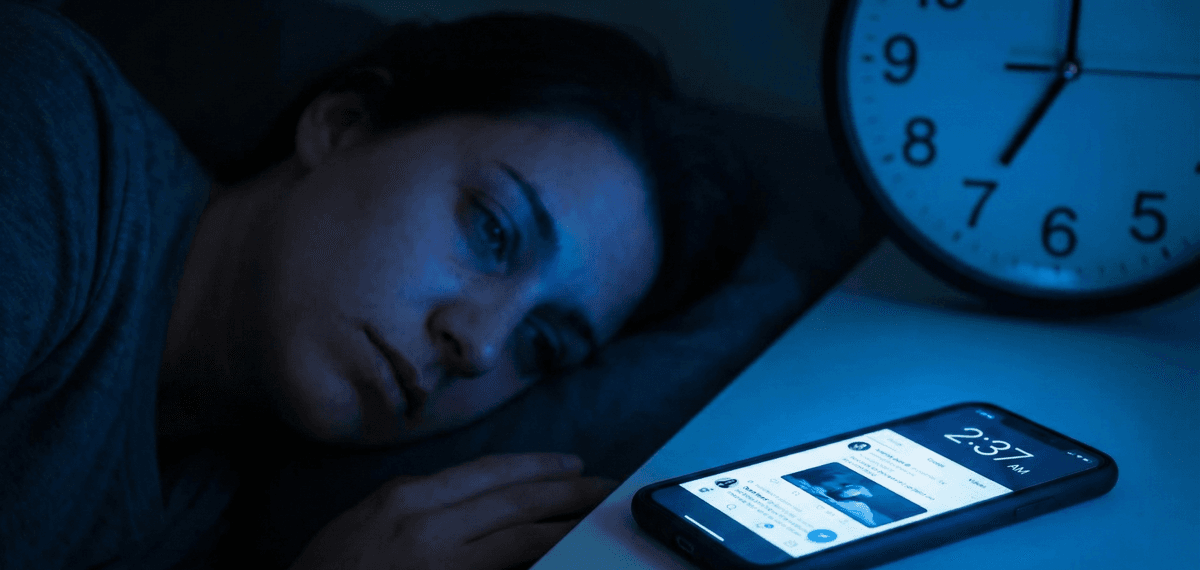
What happens when the speed of technology outpaces the speed of our biology? Scientists warn that the "circadian misalignment" caused by modern life isn't just making us tired—it's inviting chronic disease. Here is the story of how to reset your internal clock.
Today Tales / Health – January 20, 2026
That heavy exhaustion you feel when the alarm goes off in the morning might not just be a result of sleeping too little. It might be because your body is living in the Tokyo time zone while your brain is trying to keep up with the New York Stock Exchange. Science has a name for this phenomenon: Social Jetlag.
Unlike our ancestors, who woke with the sun and slept with the darkness for most of human history, we now live in a world that is illuminated 24/7. But has our biology been able to keep up with this shift? The answer, unfortunately, is no.
The Invisible Clock Inside Us: Circadian Rhythm
Deep inside our brains, within the hypothalamus, lies a region the size of a grain of rice called the Suprachiasmatic Nucleus (SCN). This is our body's master clock. It manages everything from body temperature and hormone release to digestion and cell regeneration on a precise 24-hour cycle known as the Circadian Rhythm.
The primary mechanism that sets this clock is light. The amount of light entering our eyes signals our brain to either "be awake" or "prepare for sleep." However, in modern life, these signals have become dangerously crossed.
Blue Light: The Digital Caffeine
The "blue light" emitted by smartphones, tablets, and LED screens creates an artificial daytime for our brains. Looking at your phone right before bed sends a deceptive command to your brain: " The sun is up; do not release melatonin (the sleep hormone)!"
The result? The time it takes to fall asleep increases, REM sleep shortens, and you wake up feeling unrested. Research indicates that chronic circadian disruption paves the way not only for fatigue but also for obesity, diabetes, depression, and cardiovascular diseases.
What is "Social Jetlag"?
If you wake up at 7:00 AM on weekdays but go to bed at 2:00 AM and wake up at noon on weekends, your body experiences a shock similar to flying across continents every single week. This discrepancy between your biological clock and your social schedule is called Social Jetlag.
This constant shifting forces your metabolism to slow down and weakens your immune system, leaving you vulnerable to illness.
How to Reclaim Your Biological Rhythm
So, how can we maintain this balance without completely disconnecting from the modern world? Experts suggest a "light diet":
-
Morning Sunlight: Exposing yourself to natural sunlight within the first 30 minutes of waking up naturally boosts your cortisol levels and starts a timer that helps you sleep better at night.
-
The 10-3-2-1 Rule:
-
10 hours before bed: No more caffeine.
-
3 hours before bed: No more food or alcohol.
-
2 hours before bed: No more work-related tasks.
-
1 hour before bed: No more screen time.
-
-
Dark and Cool: Keeping your bedroom completely dark (or using a sleep mask) and maintaining a temperature between 18-20°C (65-68°F) facilitates the transition into deep sleep.
Summary: Not a Return to Nature, but Harmony with It
Removing technology from our lives entirely isn't a realistic solution. However, acknowledging the limitations of our biology might be the single biggest step we can take for our health. At Today Tales, we want to remind you: A good day actually begins the night before.